Source ESP32 S3 Microprocessor for Mobile, Server, Laptop
Find 30 ESP32 S3 microprocessor options for mobile phones, servers, and laptops. Compare specifications like 2.4 GHz frequency, 150Mbps data rate, and Bluetooth 4.2 protocols from verified suppliers; compare the available evidence and request quotations based on your requirements.
Key considerations
Products List


![[Official Guarantee]Waveshare ESP32-S3 Mini Development Board, Based On ESP32-S3FH4R2 Dual-Core Processor, Microcontroller](https://file.focusaim.com/api/image/preview/d26b548735407f00434b750dc62c0ac0.png?bi=true&local=true)
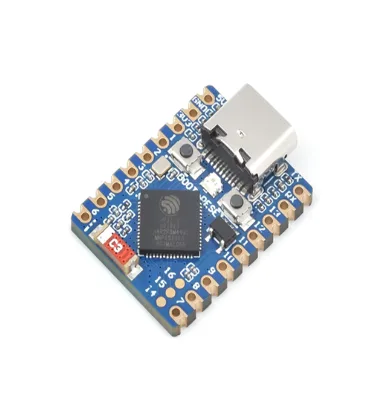
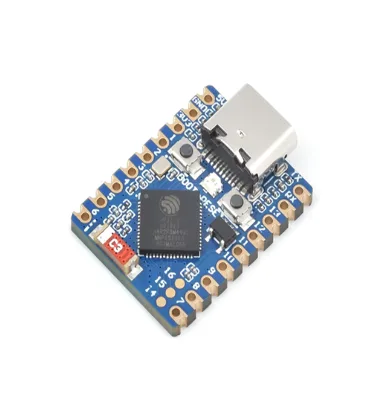


Comprehensive Sourcing Guide
ESP32 S3 Microprocessor Sourcing Guide
Procuring the ESP32-S3 microprocessor requires careful attention to its specific System on Chip architecture, which integrates Wi-Fi and Bluetooth capabilities into a single unit. Buyers must distinguish between the bare chip variants and the pre-assembled module forms, such as the ESP32-S3-WROOM-1 or ESP32-S3-MINI-1, as these differences significantly impact integration complexity and supply chain requirements. Understanding the distinction between the raw semiconductor IC and the finished module is the first critical step in defining your procurement strategy effectively.
The observed market listings indicate a diverse range of packaging options, including Reel, Tray, Tape, Tube, and Bag configurations, which directly influence your inventory management and assembly line setup. Sourcing teams should verify the specific packing format required for their automated pick-and-place machinery before placing orders, as mismatched packaging can lead to production delays or component damage. Additionally, the availability of customization services suggests that some suppliers may offer tailored solutions, though buyers must confirm the scope of these modifications to ensure they align with their specific design constraints.
Product Scope and Observed Listing Signals
The product scope for the ESP32-S3 encompasses a wide array of applications ranging from mobile phones and servers to workstations and laptops, reflecting its versatility in high-performance wireless environments. Listings frequently describe the device as a Wireless RF System on a Chip, highlighting its dual capability to handle 802.11b/G/N and Bluetooth 4.2 protocols simultaneously. Buyers should scrutinize these descriptions to ensure the specific model variant supports the exact frequency bands and data rates required for their intended deployment scenarios.
Observed listing signals reveal a price range between 0.01 and 23 USD, with minimum order quantities varying from 1 to 100 units, indicating a flexible market for both prototyping and mass production. However, these figures represent observed data points rather than guaranteed pricing structures, and buyers must treat them as indicative of market volatility rather than fixed costs. It is essential to verify the current stock status and lead times for specific models like the ESP32-SU or STM32F205RBT6, as availability can fluctuate rapidly based on global semiconductor supply chain dynamics.
Technical Specifications to Verify
Technical verification must begin with the operating temperature range, which is specified as -40°C to 85°C for the ESP32-S3 modules, ensuring reliability in harsh industrial or outdoor environments. Buyers should confirm that the selected component meets these thermal limits for their specific application, as exceeding these bounds can lead to premature failure or erratic behavior in the field. Additionally, the mounting type is listed as a Module, which simplifies integration but requires careful consideration of the physical footprint and thermal dissipation characteristics on the final PCB design.
Power consumption metrics are equally critical, with receiving currents noted at 100mA and transmitting currents reaching 240mA, necessitating robust power management strategies in the system design. The maximum data rate of 150Mbps and the 2.4 GHz frequency operation define the performance ceiling for wireless throughput, which must be validated against the bandwidth requirements of the target application. Furthermore, the presence of serial interfaces such as I2C, I2S, SPI, and UART provides extensive connectivity options, but engineers must verify pin compatibility and signal integrity for their specific peripheral connections.
Compliance and Safety Documentation
Compliance documentation for the ESP32-S3 should include verification of the RF family standards, specifically Bluetooth and WiFi, to ensure regulatory adherence in the target markets. While the product is described as conforming to standard QFN-48 or Module standards, buyers must request explicit certification documents proving compliance with regional radio frequency regulations, such as FCC or CE marks, before finalizing any procurement. Relying solely on the supplier's description without physical certification evidence can expose the buyer to significant legal and market access risks.
Safety and quality assurance are further supported by the stated warranty period of 365 Days, which offers a baseline for product reliability and vendor accountability. However, this warranty should be reviewed in the context of the specific usage conditions and the manufacturer's terms, as it may not cover damage resulting from improper handling or environmental stress beyond the specified operating range. Buyers should also confirm the availability of detailed datasheets, often accessible via direct contact, to ensure they have the necessary technical documentation for safety compliance audits and design validation.
Cost Drivers and Commercial Terms
Cost drivers for the ESP32-S3 are influenced by the complexity of the semiconductor IC and the level of integration, such as the MSI or GSI classifications observed in related listings. The inclusion of advanced features like 2.4 GHz operation and high data rates inherently increases the unit cost compared to simpler microcontrollers, and buyers should anticipate price variations based on the specific model and packaging configuration selected. Additionally, the demand for one-stop BOM list services can add value but may also introduce a premium to the overall procurement cost that must be weighed against the convenience provided.
Commercial terms regarding payment and shipment are critical for managing cash flow and logistics, with options including Bank Transfer, Western Union, and Paypal, alongside major carriers like DHL, FedEx, and UPS. Buyers must negotiate clear terms for delivery, as the origin is listed as China, which may impact transit times and import duties depending on the destination country. It is advisable to establish a clear agreement on the Incoterms and shipping method to avoid unexpected costs or delays, ensuring that the goods arrive in the condition and timeframe required for production schedules.
Supplier Qualification and Quality Control
Supplier qualification should prioritize vendors who explicitly offer a One-Stop BOM List Service and demonstrate a track record of supplying New Original Manufacturer components. The presence of a "New Original Manufacturer" brand name in listings suggests a focus on authenticity, but buyers must independently verify the supply chain integrity to avoid counterfeit components that could compromise product quality. Requesting proof of origin and traceability for the ESP32-S3 modules is essential to ensure that the components are genuine and meet the specified technical standards.
Quality control processes must include rigorous testing of the received components against the observed specifications, such as the 20 dBm output power and the specific serial interface capabilities. Buyers should implement incoming inspection protocols that verify the physical attributes, such as the Flat or Round shape and the QFN-48 standard, to ensure consistency across batches. Establishing a relationship with suppliers who provide comprehensive datasheets and technical support, such as the contact information for Jessie, can further enhance the quality assurance process and facilitate rapid resolution of any technical issues.
Long-Term Procurement Checks
Long-term procurement checks should focus on the stability of the supply chain and the availability of the ESP32-S3 series over an extended period. Given the rapid evolution of wireless standards and the specific protocol support for 802.11b/G/N and Bluetooth 4.2, buyers must ensure that the selected components will remain viable for the product lifecycle without requiring a costly redesign. Regularly reviewing the supplier's inventory levels and production capacity is necessary to mitigate the risk of shortages that could disrupt manufacturing operations.
Continuous monitoring of the product's performance in the field is also vital, particularly regarding the operating temperature range and current consumption under varying load conditions. Buyers should establish a feedback loop with their engineering teams to track any deviations from the expected performance metrics, such as the 150Mbps data rate or the 100mA receiving current. This proactive approach allows for early detection of potential issues and ensures that the procurement strategy remains aligned with the evolving technical and market requirements of the wireless IoT ecosystem.
FAQs
What is the maximum data rate for the ESP32-S3 module?
The maximum data rate is 150Mbps as specified in the product attributes. This capability supports high-speed wireless communication for applications like servers and workstations using the 802.11b/G/N protocol standards.
Can I customize the ESP32-S3 microprocessor for my project?
Yes, customization is available for this wireless system on a chip. Buyers can request specific configurations while the standard offering includes support for Bluetooth 4.2 and WiFi protocols with a 365-day warranty.
Which shipping methods are used for the ESP32-S3 modules?
Shipping is handled via DHL, FedEx, TNT, UPS, and China Post. These reliable carriers ensure timely delivery of the modules packed in reels, trays, or tubes directly from the manufacturing origin in China.
What is the operating temperature range for the ESP32-S3?
The operating temperature range is from -40 degrees Celsius to 85 degrees Celsius. This wide range ensures reliable performance in various environments for mobile phones, laptops, and other electronic devices requiring stable operation.
How much current does the ESP32-S3 consume during transmission?
The current consumption during transmitting is 240mA according to the product specifications. This power draw is higher than the 100mA required for receiving, which is typical for active wireless transmission states in this chip.
What payment methods are accepted for purchasing these components?
Accepted payment methods include Bank Transfer, Western Union, and Paypal. These options provide flexibility for international buyers sourcing electronic components like the ESP32-S3 series from suppliers offering one-stop BOM list services.